If you are 50 to 75 and you want to stay active, you do not need a boot camp. You need a plan you will repeat. I am Bob Murphy. I am 64, a grandfather, and I still train. This fitness over 50 guide is the hub I wish I had in my early 50s. It explains what changes after 50, how to train in a week, and where to go next for workouts, strength, walking, balance, joints, bone health, and energy.
Why does fitness change after 50?
Muscle and power decline faster if you stop using them. After 50, unused muscle is expensive. You feel it on stairs, in the garden, and when you get up from the floor.
Recovery takes longer. The workout that felt fine at 35 can leave you flat for three days at 58 if the dose is too high. That is a loading problem, not a character problem.
Joints are less forgiving of sloppy form and big jumps in volume. Knees, hips, low backs, and shoulders need warm-ups and a range of motion you can control.
Balance is a skill. Vision, inner-ear input, and ankle strength all shift with age. If you never practice standing on one leg, the first time you need it should not be on a wet sidewalk.
Hormones, sleep, and stress also change the picture. Many people 55+ notice they gain fat more easily around the middle even when the scale moves slowly. Strength training and walking still work. They just need to be consistent, not heroic.
The good news is simple. Muscle still responds. Bone still responds to loading. Balance still improves with practice. You do not have to train like a 25-year-old. You have to train on purpose.
What should over 50 fitness actually include?
Three things cover most of what people want: strength so you can lift and stand, walking so your heart and legs stay useful, and balance so you stay on your feet.
Strength
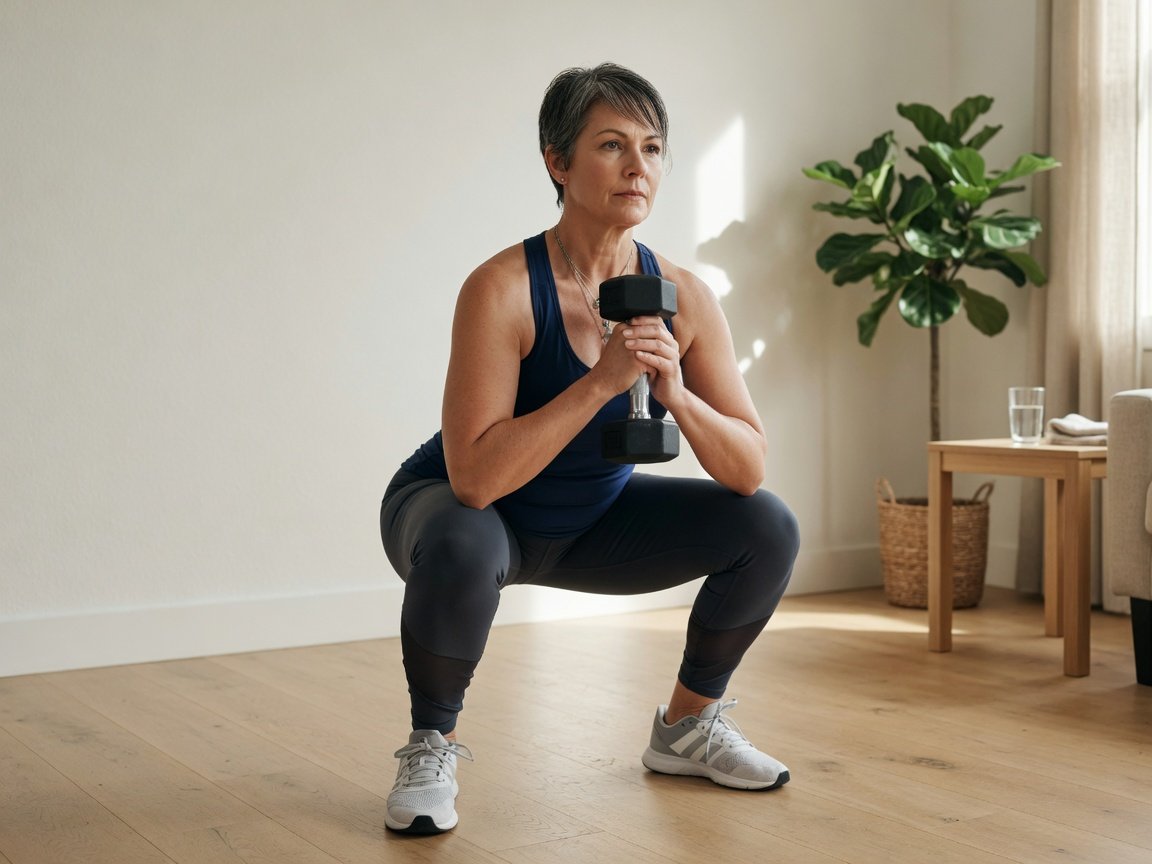
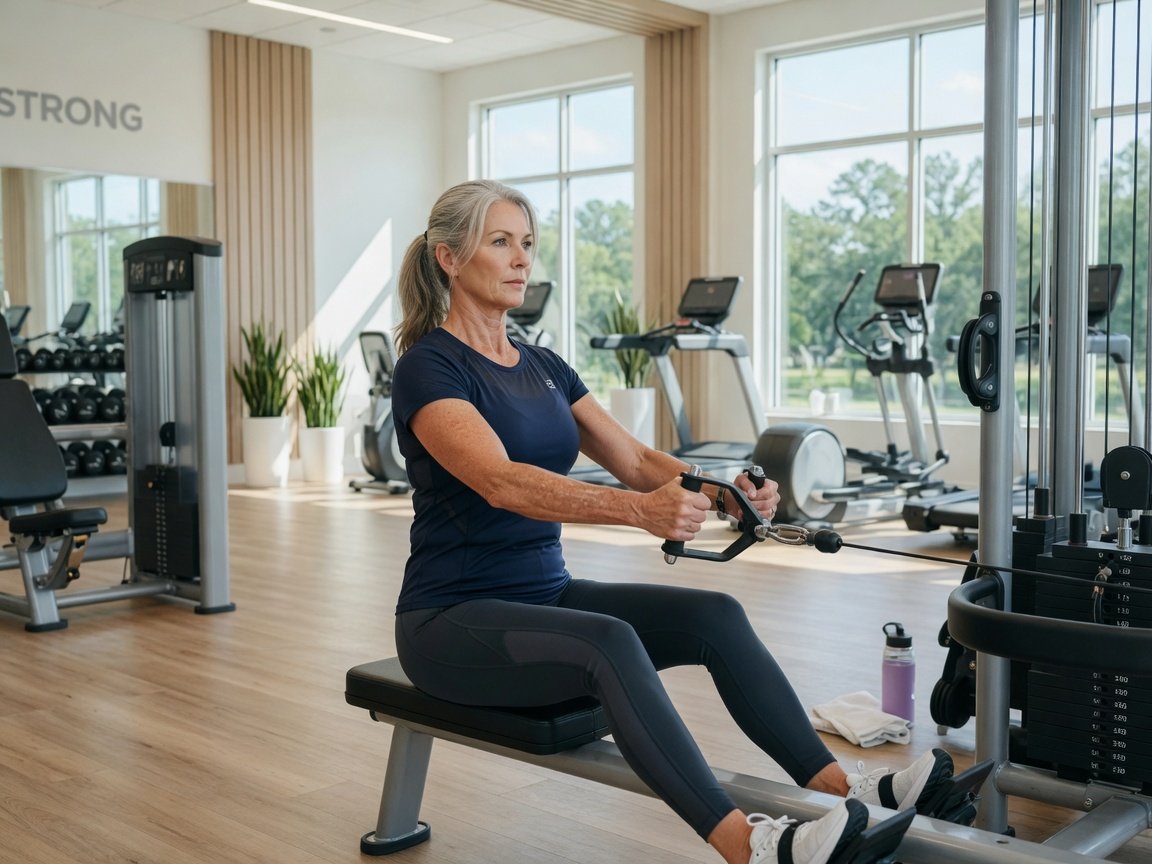
Train the patterns you use in life: squat or sit-to-stand, hinge or deadlift pattern, push, pull, and carry. Two sessions a week, 25 to 40 minutes, is enough to start. Use 2 to 3 sets of 8 to 12 reps. Rest 90 seconds. Leave 2 to 3 reps in reserve. You should finish able to talk, not gasping.
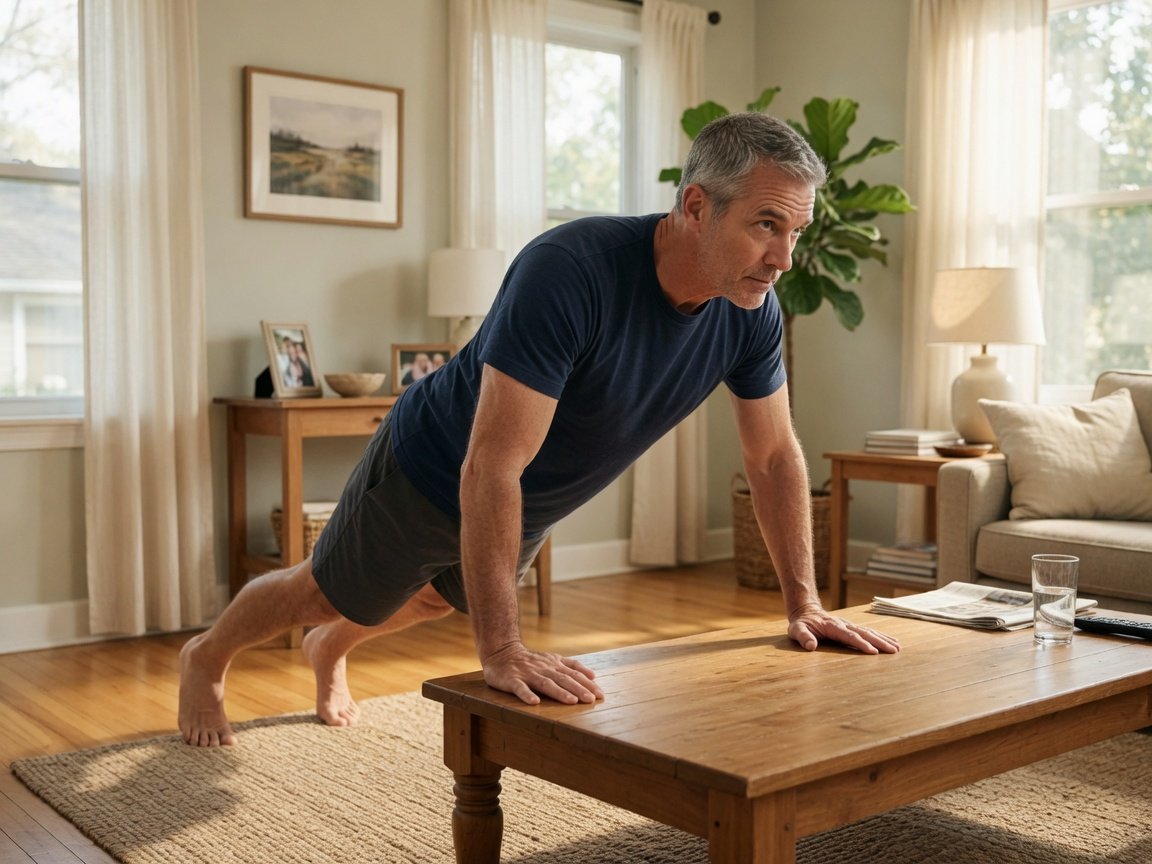
If your knees complain, sit to a higher chair. If your back complains, shorten the hinge and keep the weight close. If your shoulders complain, press to a comfortable height or swap to a floor press or wall push-up. Details live in the strength training after 50 guide.
Walking
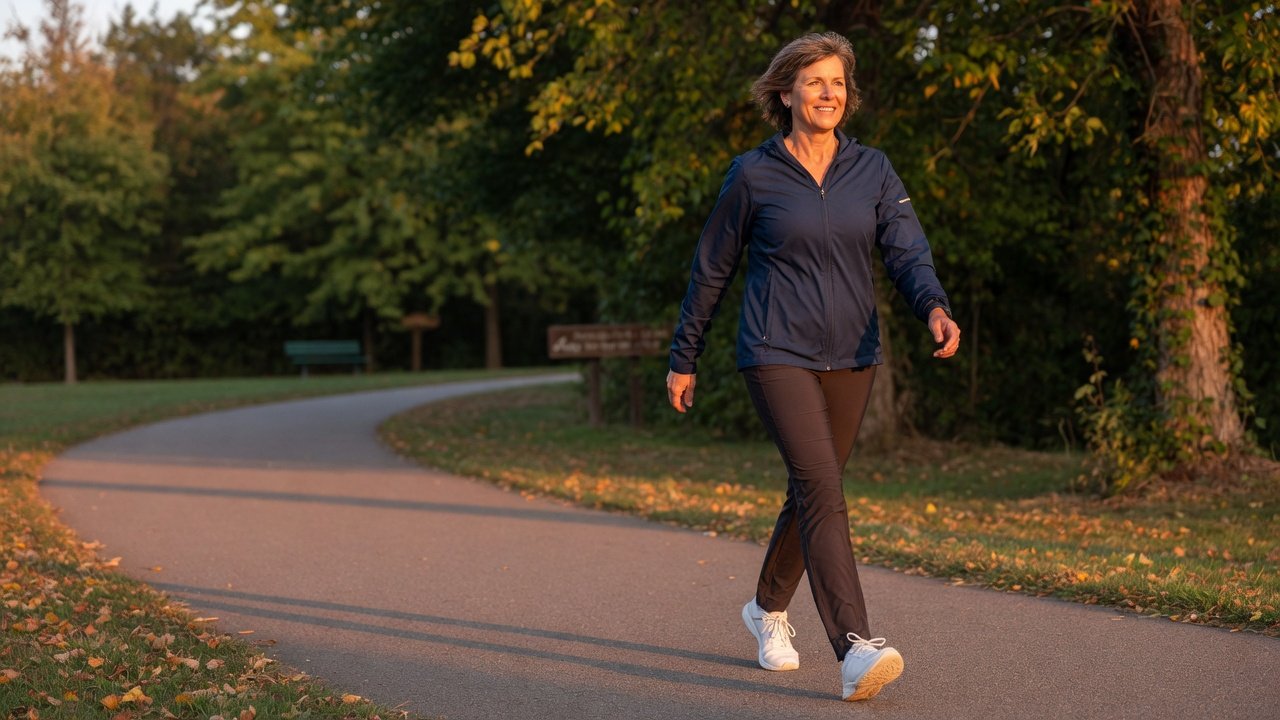
Walk most days. Start with 15 to 25 minutes at a pace where you can speak in full sentences. Build toward 30 to 45 minutes. One or two days can include short faster intervals once the easy walk feels normal. See the walking plan after 50.
Balance
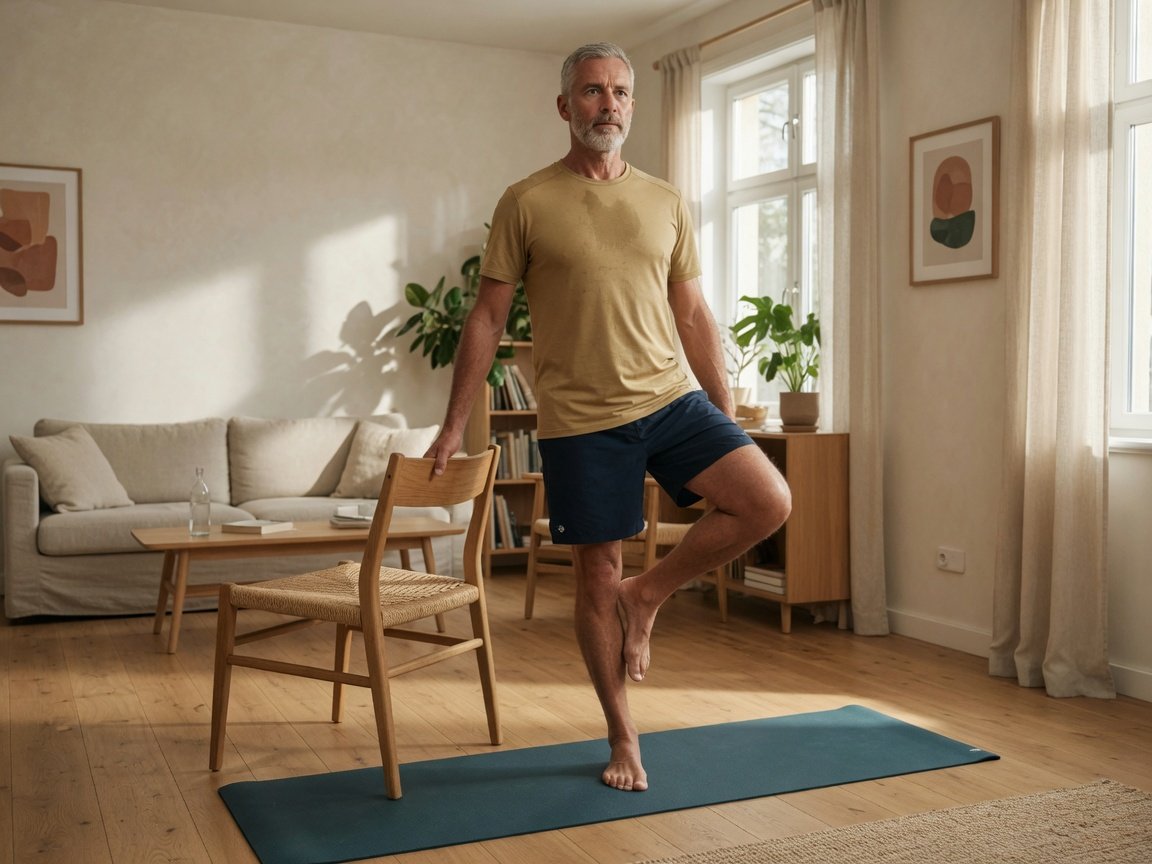
Practice 8 to 12 minutes, three days a week. Hold a counter at first. Progress from feet together, to tandem stance, to single-leg holds. Add a head turn only when the stance is steady. The balance exercises after 50 page gives the full drill list.
Mobility is the glue. Tight hips and a stiff upper back make every lift and walk feel worse. Ten minutes after walking is plenty. Use the stretching and mobility after 50 sequence.
What does a weekly over 50 fitness plan look like?
Use this as your default week. It is the same structure behind the workouts after 50 plan.
| Day | Session | Time | Notes |
|---|---|---|---|
| Monday | Strength A | 30–35 min | Sit-to-stand, row, hinge, carry |
| Tuesday | Walk | 25–35 min | Easy conversational pace |
| Wednesday | Balance + mobility | 20 min | Counter nearby |
| Thursday | Strength B | 30–35 min | Push, split squat, pull, calf raise |
| Friday | Walk | 30–40 min | Optional 4 × 1 min a bit faster |
| Saturday | Easy walk or rest | 20 min | Or chores that keep you moving |
| Sunday | Rest or stretch | 10 min | Sleep in if you need it |
Strength A and B are full-body. You are not splitting into “chest day.” That style wastes recovery for most people over 50.
Strength A — sets, reps, rest
| Move | Sets × reps | Rest | Beginner swap |
|---|---|---|---|
| Sit-to-stand or squat to chair | 3 × 8–12 | 90 sec | Higher chair, hold the seat |
| Dumbbell or band row | 3 × 8–12 | 90 sec | Seated band row |
| Hip hinge / Romanian deadlift | 3 × 8–10 | 90 sec | Hands on hips, no load |
| Farmer carry | 3 × 30–40 sec | 60 sec | Walk with grocery bags |
| Dead bug or heel tap | 2 × 6/side | 45 sec | March in chair |
Strength B — sets, reps, rest
| Move | Sets × reps | Rest | Beginner swap |
|---|---|---|---|
| Wall or counter push-up | 3 × 8–12 | 90 sec | Hands higher on the wall |
| Split squat to chair | 2–3 × 6–8/side | 90 sec | Sit-to-stand instead |
| Lat pulldown or band pulldown | 3 × 8–12 | 90 sec | Doorway band row |
| Calf raise | 3 × 10–15 | 60 sec | Hold the counter |
| Side-lying clamshell or band walk | 2 × 10/side | 45 sec | Shorten the range |
Warm up for 5 minutes: march in place, arm circles, hip hinges with no weight, and 10 sit-to-stands. Stop a set if form breaks. That is the session talking, not a reason to quit the week.
How do I start fitness over 50 this week?
- Get the green light if you need it. Check with a doctor before you start if you have chest pain, uncontrolled blood pressure, recent surgery, dizziness, or a condition you are treating. This is fitness information, not medical advice.
- Pick your two strength days. Monday and Thursday work for most people. Put them on a calendar like an appointment.
- Walk after meals or first thing. Twelve minutes counts. Do not wait for a perfect 45-minute window.
- Add one balance drill daily. Tandem stance while the kettle boils. Hold the counter. Thirty seconds each side.
- Use chair swaps without apology. A full range you control beats a deep squat you cannot own.
- Track three numbers. Workouts finished, minutes walked, and how you slept. Ignore the rest for 14 days.
If you want a day-by-day on-ramp, use the 7-day start here path.
What mistakes slow people down after 50?
Going from zero to six hard days. Soreness that wrecks sleep is not a badge. It is a recovery debt.
Only walking, then wondering why stairs still feel heavy. Walking is the base. Strength is what keeps you independent.
Copying a 25-year-old’s split or a high-intensity video with jumps and burpees. You can get athletic later. First you need joints that trust you.
Skipping balance because it looks too easy. Easy is the point until it is not.
Chasing weight loss with crushing cardio and almost no protein or strength. That combination costs muscle. Muscle is what keeps the metabolism and the grocery bags working. For a calmer approach, read weight loss after 50.
Waiting to feel motivated. Motivation follows the second week of showing up, not the first.
Who is this over 50 fitness guide for?
This site is for men and women 50 to 75 who want to stay active, strong, and independent. You may be returning after a long layoff. You may already walk and want a real strength plan. You may be dealing with cranky knees or low energy.
It is not for people looking for anti-aging hype, extreme fat-loss challenges, or medical treatment. If you need rehab after surgery, work with your clinician and a qualified physical therapist. Then come back to these plans when you have clearance.
You will not find gym-bro language here. You will find sets, reps, rest, and swaps. That is the job of a guide site.
Low energy, joints, and bone. If you feel wiped out, start with walking and two short strength days, then read how to get more energy after 50. If joints limit you, use exercises for joint pain after 50. If bone density is a concern, add the loading in bone health exercises after 50.
Where should I go next?
This page is the pillar. Every guide below is a spoke. Start with workouts if you want a full week. Start with strength if muscle is the gap. Start with walking if you have been still for a long time.