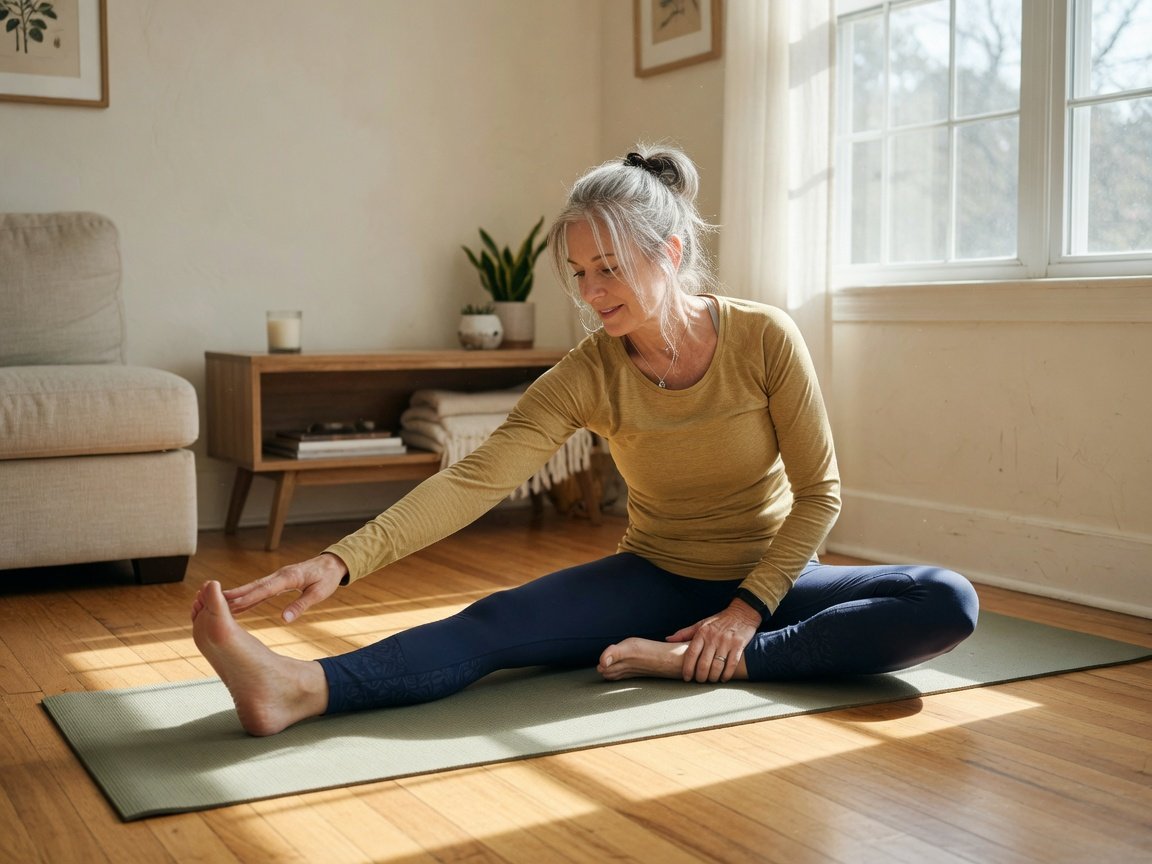
Exercises for joint pain after 50 should keep you moving without picking a fight with the joint. Use a range you control, load the muscles around the joint, and drop impact. Check with a doctor first. Then use this as the joint-friendly branch of the fitness over 50 guide.
What rules keep sore joints training?
A 2 out of 10 ache that eases as you warm up is common. A 6 out of 10 spike, swelling, or pain that is worse the next morning means you did too much.
Shorten the range before you quit the movement. A high chair squat is still a squat. A wall push-up is still a push.
Warm up longer: 8 minutes of easy cycling, marching, or walking, then the first set with no load.
What exercises help when joints complain?
| Area | Do this | Sets × reps | Avoid at first |
|---|---|---|---|
| Knees | High sit-to-stand, terminal knee extension with band, cycling | 2–3 × 8–12 | Deep lunges, jumping |
| Hips | Glute bridge, supported hinge, side-lying clamshell | 2–3 × 8–12 | Deep low chairs, long walking lunges |
| Low back | Short hinge, bird dog or seated march, walking | 2–3 × 6–8 | Loaded twisting, toes-to-floor stretching |
| Shoulders | Wall push-up, supported row, light band external rotation | 2–3 × 8–12 | Upright rows, behind-neck presses |
A 25-minute joint-friendly session
Easy bike or walk 6 min. Sit-to-stand 3 × 8. Row 3 × 10. Glute bridge or standing squeeze 2 × 10. Wall push-up 2 × 8. Carry 2 × 20 sec. Then 6 minutes from flexibility after 50.
How do I train in a week with cranky joints?
- Two strength days using the menu above, not a new video every session.
- Walk or cycle on two or three other days. See the walking plan after 50 and shorten the stride.
- Do home workouts over 50 if the gym floor feels slippery or rushed.
- Keep some strength training after 50. Muscles are joint insurance. Do not only stretch.
- Ice after if a clinician has suggested it. More important: do not add a set to “work through” a spike.
- If energy is also low, cut volume first, not sleep.
What do I do on a flare day?
Do not test the sore joint. Walk or cycle for 10 to 15 minutes if that does not spike pain. Then stop. A flare is information.
The next good day, return to the high-chair version, not to the deepest range you have ever used. Pride is expensive in knees and shoulders.
Heat before moving is fine for some people. Movement itself is often the better warm-up. If a clinician gave you a personal plan after imaging or surgery, that plan wins over this page.
I still train with a cranky shoulder some weeks. The row stays. The overhead press goes. That is not quitting. That is how you still have a training week with joint pain after 50.
What should I expect in four weeks?
The joint may not be silent. The goal is a joint you can live with while the muscles around it get stronger. Stairs may feel less threatening. Getting up from a chair may feel less like a negotiation.
If four weeks of this menu still spike pain, stop guessing and see a clinician. This page cannot see your knee. It can only give you a calmer starting dose.
Keep walking on the good days. Motion feeds joints. A full week on the couch usually makes the next attempt harder, not easier, unless a doctor told you to rest after an injury.
What should you read next?
Keep using this plan for four weeks before you add extras. Then branch out.
Frequently asked questions
Can I exercise with joint pain after 50?
Usually yes, with a smaller range, less impact, and strength in the muscles around the joint. Stop if pain is sharp, swelling, or lingering into the next day.
Should I rest until it is gone?
Full rest often makes joints stiffer. Easy movement and controlled strength are the usual path, after a doctor rules out a problem that needs care.
What cardio is friendlier to joints?
Walking on a level path, cycling, and pool walking. Skip pounding and jumping at first.
Are squats forbidden with sore knees?
No. High-box sit-to-stands are often useful. Depth is the variable, not the pattern.
When should I see a doctor?
New swelling, locking, giving way, chest pain, dizziness, or pain after a fall. This site is not medical care.