Bone health exercises after 50 are strength moves you can load and a little impact you can control. Muscle pulling on bone, plus standing work, is the training signal. Swimming is fine for joints and the heart. It is not enough for bone on its own. Use this with the fitness over 50 guide.
What actually loads bone?
Heavy-enough strength training. Standing on your feet. Some heel strike. Consistency over months, not one hard week.
I still squat to a chair and carry bags at 64 because I want bone and muscle for the long haul, including chasing grandkids. I do not jump off boxes.
What is a bone-focused session?
Two or three days a week. Rest 90 seconds. 2 to 3 sets.
| Exercise | Sets × reps | Rest | Note |
|---|---|---|---|
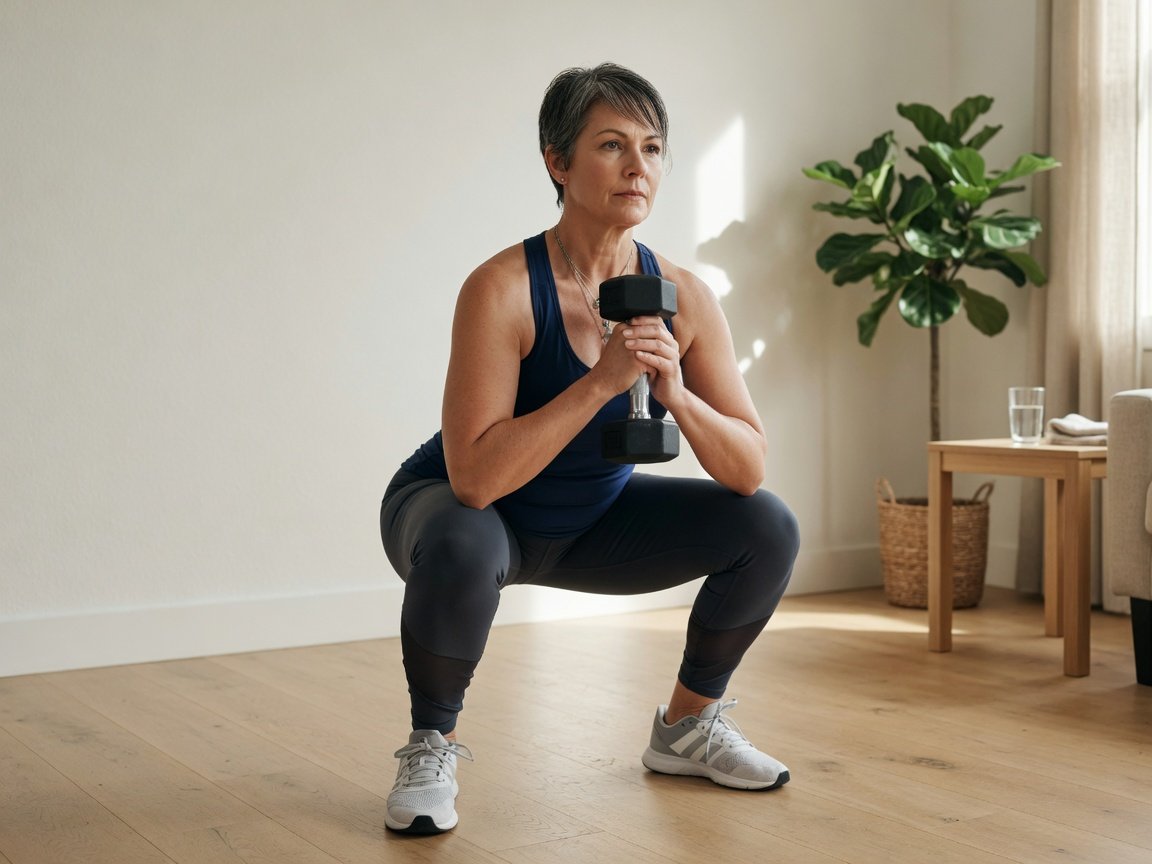
| Sit-to-stand or goblet squat | 3 × 8–12 | 90 sec | Add load when 12 reps are easy |
| Step-up to a low step | 3 × 6–8/side | 90 sec | Hold a rail. Skip if a knee flares |
| Hip hinge / Romanian deadlift | 3 × 8–10 | 90 sec | Load close to the legs |
| Row | 3 × 8–12 | 90 sec | Upper back matters too |
| Overhead press if shoulders allow | 2 × 8 | 90 sec | Otherwise chest press |
| Farmer carry | 3 × 30–40 sec | 60 sec | Stand tall |
| Heel drops | 2 × 10 | 45 sec | Rise on toes, drop the heels. Skip if a clinician said no impact |
How do I build a bone-friendly week?
- Do the session above twice a week. A gym version lives in the gym routine after 50.
- Walk most days on the walking plan after 50. Walking is useful. It is not the whole plan.
- Practice balance exercises after 50 so a stumble is less likely. Broken bone risk is both density and falling.
- Eat protein at meals. Training without it is a weaker signal. This is not a diet prescription; talk with your clinician about calcium, vitamin D, and medication.
- Use the loading rules in strength training after 50. Bone likes progressive load, not random exhaustion.
- If a joint limits impact, keep the strength and skip heel drops. Strength still counts.
What is not enough for bone?
Stretching classes without load. Easy swimming with no strength work. Walking alone if you never pick anything up. Those can still be good for mood and joints. They are incomplete for bone health after 50.
Posture work helps you load the spine in a better position, but standing tall is not a substitute for sit-to-stands and carries. Do both.
Medication, calcium, and vitamin D are medical decisions. I will not pretend a workout replaces a clinician. I will say the training you can repeat is the part you control this week.
How long until bone training is worth it?
Bone is slow. Think in months, not in a long weekend. The early wins you will feel are muscle, balance, and confidence on stairs. Those still matter because they lower fall risk while bone is remodeling.
Stay standing when you can. Take calls walking. Carry the groceries. Then do the two loaded sessions. That is a bone health week for a 64-year-old grandfather who still wants to be useful, not fragile.
If a session leaves you too sore to walk the next day, the load jumped too fast. Drop a set, keep the pattern, and come back Thursday.
What should you read next?
Keep using this plan for four weeks before you add extras. Then branch out.
Frequently asked questions
What exercises help bone health after 50?
Progressive strength training plus some impact you can tolerate: sit-to-stands, hinges, carries, step-ups, and heel drops if your clinician agrees.
Is walking enough for bone?
Walking helps. It is usually not enough by itself. Add two strength days.
Are jumps required?
No. Many people 55+ do better with step-ups, brisk walking, and heel drops than with jumping.
How often?
Strength two to three days a week. Walking most days.
What if I have osteoporosis?
Get a plan from your clinician or a physical therapist. Then use the moves they allow. This page is general fitness information.